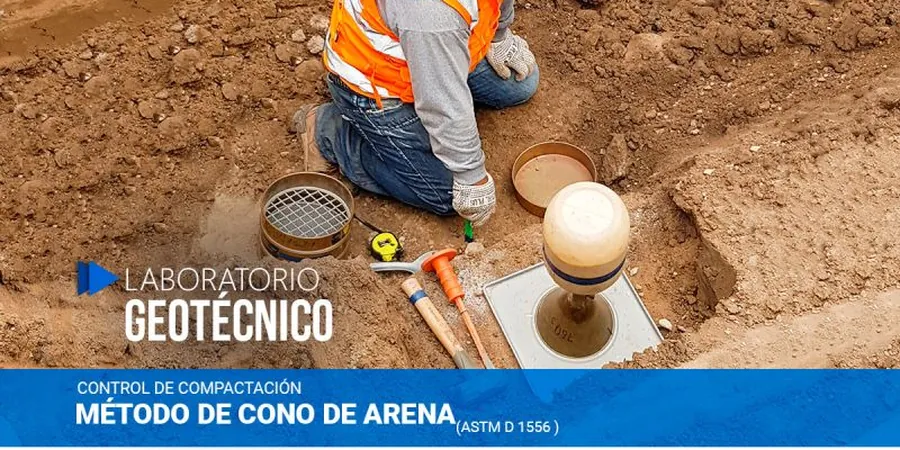
Drogheda’s expansion along the Boyne River has placed modern infrastructure directly over complex glacial and alluvial deposits. The historic core sits on a limestone ridge, but new industrial and residential estates spread across softer, compressible ground where engineered fill performance can make or break a project. Verifying that compaction meets specification is not optional: it is a direct requirement under Irish Building Regulations Technical Guidance Document A. Our team performs field density tests with the sand cone density method on active sites from the Donore Road business parks to the northern suburbs near Termonfeckin. When backfill consistency is questioned, we combine the test with a proctor test to establish the reference maximum dry density for the specific borrow material, ensuring the comparison is valid and defensible.
A sand cone test takes about 20 minutes per point, but rushing the measurement by even two minutes can shift the density reading by over 3%.
Local considerations
On sites across Drogheda, we often see fill material sourced from local quarries that looks dense but has not been properly broken down by the roller. The surface crust feels firm, yet 150 mm below the gravel cap the density drops by 10 percent or more. A proof roll alone cannot detect this, and the risk is settlement under the first season of heavy traffic or the first wet winter. The sand cone test catches these weak layers because it measures density at the actual compaction lift depth, not at the surface. Skipping this step on a commercial slab or a roadway base can easily lead to differential movement, cracked pavements, and costly remedial excavation within 12 to 24 months. In the Boyne Valley’s variable ground, a density record sheet with five or six test locations is the cheapest insurance a developer can buy.
Frequently asked questions
How much does a field density test with the sand cone method cost in Drogheda?
A single sand cone test typically costs between €90 and €140 per point, depending on site access, number of points per day, and travel distance within the Drogheda area. Most projects require a minimum of three to five points per lift for a meaningful assessment.
How long does it take to get results from a sand cone test?
The field measurement takes around 20 minutes per point. The soil sample is then sealed and transported to the lab for moisture content determination. We can usually issue a density report by the end of the working day, and sometimes within a few hours for urgent phase inspections.
What type of soil can the sand cone method be used on?
The method works well on coarse-grained and fine-grained soils with a maximum particle size of about 75 mm. It is not suitable for very soft, saturated clays that deform under the weight of the technician, or for clean gravels where the excavated hole cannot hold its shape during the test.
How many density tests do I need for a building foundation in Drogheda?
Technical Guidance Document A does not prescribe a fixed number, but industry practice in the Leinster region is one test per 200 to 300 square metres per compacted lift, with a minimum of three tests per lift area. The engineer responsible for the design will specify the exact frequency in the project’s earthworks specification.