← Home · Laboratory

Atterberg Limits Testing in Drogheda for Cohesive Soil Characterization

Together, we solve the challenges of tomorrow.

LEARN MORE →

On sites along the Boyne River or in the expanding residential zones around Drogheda's southern edge, the behavior of fine-grained soils often makes or breaks a foundation design. We have seen glacial till that looks stable in dry weather turn nearly liquid after a week of Irish rain, simply because its moisture content crossed a critical threshold. The Atterberg limits test gives us those exact thresholds: the liquid limit where soil flows, the plastic limit where it crumbles, and the shrinkage limit where volume loss stops. For any project involving excavation, embankment, or shallow footings in Drogheda, these three numbers define the moisture range where the ground can be safely worked. When the underlying material includes the laminated clays common to the Boyne Valley, we typically pair the Atterberg limits with a grain-size analysis to confirm the silt-clay ratio, and in some cases run a triaxial test on remolded specimens at the plastic limit to verify strength parameters for the geotechnical model.

Knowing the liquid limit and plastic limit of Drogheda clay tells you the exact moisture band where you can safely compact, excavate, or load the ground without triggering a stability failure.

Methodology and scope

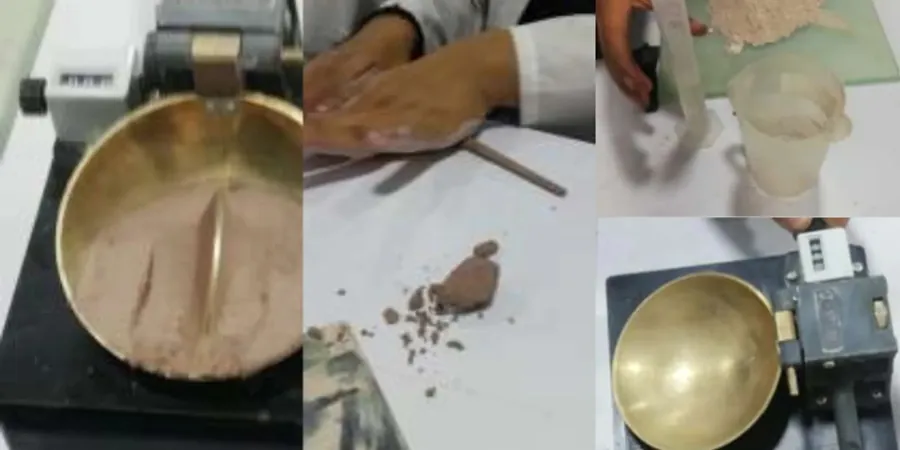
Drogheda's position straddling the boundary between lowland pasture and coastal estuary creates a mix of substrates that demands precise plasticity testing. The boulder clays left by the last glaciation often contain lenses of softer, laminated material that can vary from medium plasticity to high plasticity within a single borehole. A project that ignores this variability risks differential settlement, particularly where foundation loads change across a building footprint. Our laboratory in Drogheda performs the full procedure according to BS EN ISO 17892-12:2018, including the Casagrande cup method for liquid limit and the thread-rolling method for plastic limit, with natural and oven-dried samples to capture the effects of organic content. For road schemes and residential access routes, we often combine Atterberg data with CBR testing to predict subgrade performance under repeated traffic loading, and on sloping sites above the town we integrate the results into a slope stability analysis to evaluate long-term factor of safety after prolonged rainfall.
Atterberg Limits Testing in Drogheda for Cohesive Soil Characterization
Technical reference image — Drogheda

Local considerations

A four-storey apartment block we reviewed near the Marsh Road encountered serious problems because the pre-construction site investigation skipped Atterberg testing on the upper two meters of silty clay. The material classified visually as low-plasticity, but after a winter of high groundwater from the Boyne, the actual in-situ moisture content exceeded the plastic limit across half the footprint. Excavation became a battle with pumping and stone stabilization, adding weeks to the program and a six-figure sum to the groundwork budget. Had the liquid and plastic limits been measured during the initial phase, the designer would have specified a working platform and a different dewatering sequence from day one. In Drogheda, where alluvial and glacial materials often coexist within a single plot, skipping Atterberg limits on fine-grained soils turns a manageable geotechnical condition into a contractual dispute.

Need a geotechnical assessment?

Reply within 24h.

Email: contact@geotechnical-engineering.co

Technical parameters

ParameterTypical value
Liquid Limit (LL)BS EN ISO 17892-12: Casagrande cup (penetrometer option available)
Plastic Limit (PL)3 mm thread rolling at remolded moisture content
Plasticity Index (PI = LL - PL)Key indicator of soil reactivity and swell potential
Liquidity Index (LI)Assesses in-situ consistency relative to Atterberg boundaries
One-point methodAvailable for rapid screening of uniform deposits per BS EN ISO 17892-12 Annex A
Sample preparationWet sieved through 425 µm sieve; tested on natural and oven-dried material
ReportingPlasticity chart classification (CL, CI, CH, etc.) per BS 5930:2015+A1:2020

Associated technical services

01

Standard Atterberg Limits (LL, PL, PI)

Full determination of liquid limit by Casagrande cup and plastic limit by thread rolling, with calculation of plasticity index and classification per BS 5930. Suitable for foundation design, earthworks specification, and regulatory submissions in Drogheda.

02

One-Point Liquid Limit Screening

Rapid assessment using the one-point method for sites with relatively uniform geology. Cost-effective when multiple samples from the same stratum require classification, reducing turnaround time for Drogheda projects on tight schedules.

03

Soil Plasticity Profile Package

Sequential sampling down a borehole or trial pit profile, with Atterberg limits at each lithological change. Combined with natural moisture content to compute liquidity index, providing a vertical map of consistency across the Drogheda site.

04

Integrated Cohesive Soil Assessment

Atterberg limits paired with particle size distribution, organic content, and shear strength tests. Delivers a complete geotechnical description of fine-grained soils for complex Drogheda developments where material behavior governs the foundation solution.

Applicable standards

BS EN ISO 17892-12:2018 (Geotechnical investigation and testing — Laboratory testing of soil — Part 12: Determination of liquid and plastic limits), BS 5930:2015+A1:2020 (Code of practice for ground investigations), IS EN 1997-2:2007 (Eurocode 7 — Geotechnical design — Part 2: Ground investigation and testing, Irish National Annex)

Frequently asked questions

How much does Atterberg limits testing cost in Drogheda?

Atterberg limits testing in Drogheda typically ranges from €60 to €100 per sample, depending on whether you need the full liquid limit, plastic limit, and plasticity index determination or a one-point screening. The final cost depends on the number of samples and the required turnaround time. For a specific quote on your project, contact our Drogheda laboratory with the borehole logs or sample inventory.

What is the difference between liquid limit and plastic limit?

The liquid limit is the moisture content at which a cohesive soil transitions from a plastic state to a liquid state and begins to flow under repeated loading. The plastic limit is the lower moisture boundary where the soil stops behaving plastically and starts crumbling when remolded. The difference between the two — the plasticity index — defines the range of moisture over which the soil remains workable, which is critical for compaction and excavation planning in Drogheda's variable glacial deposits.

How long does it take to get Atterberg limits results in Drogheda?

Standard turnaround for Atterberg limits testing in our Drogheda laboratory is 3 to 5 working days from sample receipt. Expedited service with results in 24 to 48 hours is available for time-sensitive construction decisions. The timeline depends on the number of samples and whether they require extended air-drying due to high natural moisture content, which is common in the alluvial clays along the Boyne estuary.
Location and service area

We serve projects across Drogheda and its metropolitan area.

View larger map